
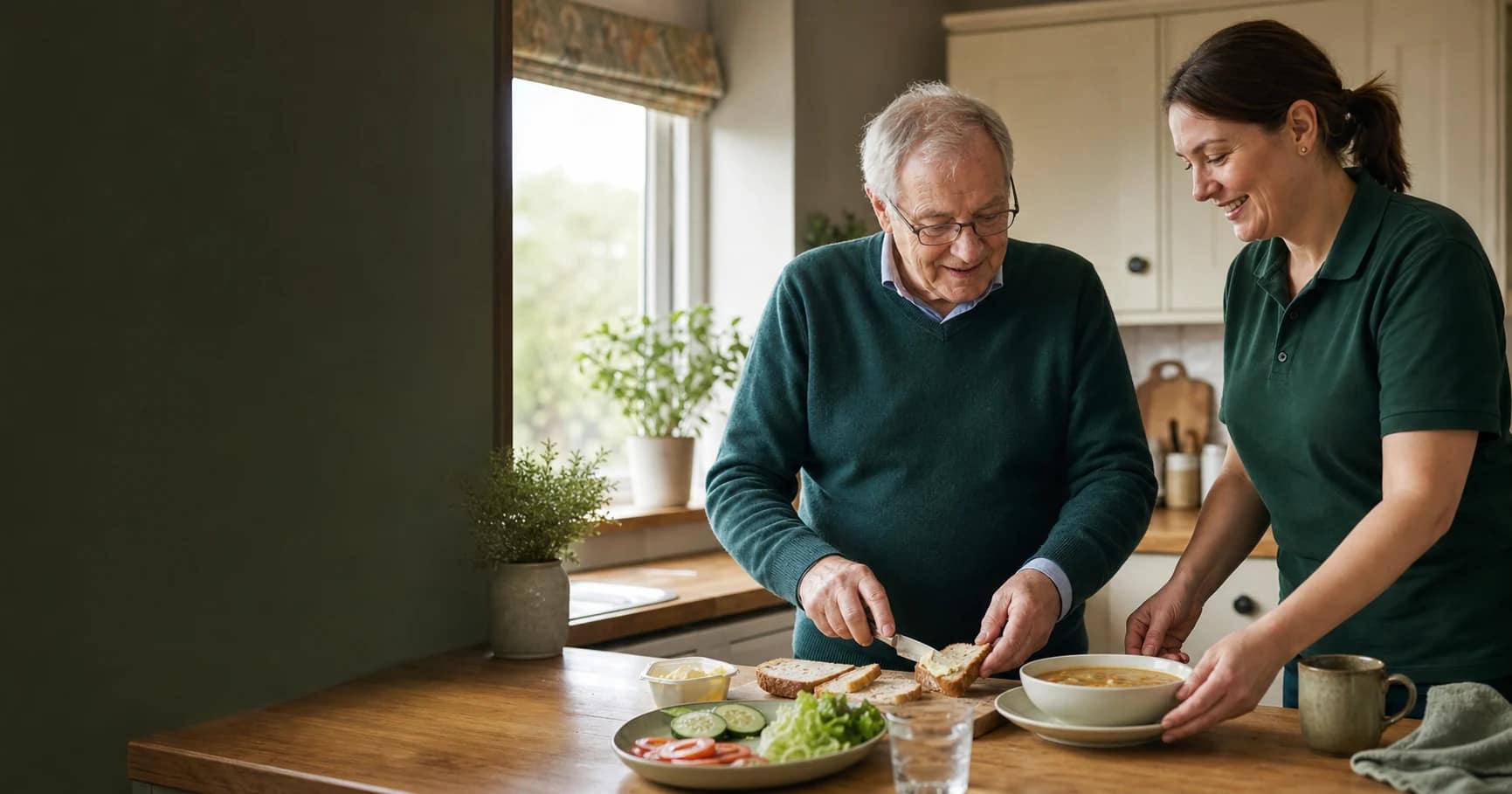
Meal Preparation at Home in Worthing
Familiar meals.
Personal choice.
Practical support at home.
From preparing a favourite breakfast to cooking an evening meal or leaving snacks and drinks within easy reach, our Care Givers provide practical, person-centred support around food and everyday routines.
What meal preparation can include
Everyday food, made easier at home
Meal preparation can be included within a care visit or arranged as part of a wider package. What can be prepared depends on the person’s needs, the visit length and what is available in the home.
Preparing meals
Breakfasts, light lunches, evening meals and familiar favourites prepared in the person’s own kitchen.
Helping someone take part
Support with safe, manageable parts of cooking when the person would like to remain involved.
Snacks and drinks
Preparing drinks and leaving agreed snacks or refreshments accessible for later.
Washing up and tidying
Cleaning the items used and leaving the immediate food-preparation area tidy after the visit.
Meals shaped around the person
It should still feel like their food, in their home
Supporting someone with meals is not simply about putting food on a plate. It is about familiar tastes, personal choice, independence and making eating and drinking easier to include in everyday life.
We can prepare a wide range of familiar meals, simple favourites, breakfasts, snacks and reheatable dishes within the time and support agreed.
- 01 Favourite meals and familiar recipes
- 02 Preferred portion sizes
- 03 Food dislikes and ingredients to avoid
- 04 Cultural and religious choices
- 05 Usual meal times and routines
- 06 Where the person prefers to eat
- 07 Whether they enjoy company at mealtimes
- 08 How they would like to stay involved
Dietary needs and guidance
Meals shaped by preference and clear guidance
Care Givers prepare meals based on the person’s preferences and any dietary guidance recorded in their care plan. Specialist diets remain guided by an appropriate healthcare professional.
Preferences recorded clearly
The care plan includes relevant allergies, intolerances, cultural choices, personal preferences and dietary requirements.
Professional guidance followed
Where a healthcare professional has provided dietary instructions, Care Givers follow the current guidance recorded for the person.
Texture guidance respected
Texture-modified food or thickened drinks are prepared only in line with current professional advice in the care plan.
Concerns raised appropriately
Care Givers record relevant observations and follow the agreed reporting process rather than prescribing diets or diagnosing problems.
When meals become more difficult
A little practical help can make everyday meals easier
A little practical help may make it easier to keep familiar food and drinks within the person’s usual routine.
Where appetite, weight or wellbeing causes concern, Care Givers record relevant observations and follow the agreed reporting process.
- Someone who no longer feels confident cooking alone
- A person who finds standing at the worktop tiring
- Someone whose arthritis makes chopping or packaging difficult
- A person with dementia whose meal routine has become less consistent
- Someone who forgets to eat or drink regularly
- A person returning home after a hospital stay
- Someone whose appetite has reduced
- A family concerned that food is being left unused
What Care Givers notice and report
Small changes can be worth sharing
Care Givers are well placed to notice when someone’s usual eating, drinking or kitchen routine changes.
They record relevant observations and follow Aurora’s agreed reporting process. They do not diagnose the cause or independently change a prescribed diet.
Talk to our local teamMeal preparation alongside other care
One visit can support the wider routine
Food and drinks often fit naturally alongside another part of the day. Combining support can make a visit feel calmer and more useful.
Personal care
A morning visit may include washing, dressing and preparing a familiar breakfast.
Learn moreMedication support
Meals and drinks can be coordinated with agreed medication support when the care plan and timing require it.
Learn moreDementia care
Familiar food, patient support and a predictable routine can make mealtimes feel more comfortable.
Learn moreCompanionship
A companionship visit may include making lunch together and enjoying conversation at the table.
Learn moreLocal meal preparation
Across Worthing and nearby West Sussex communities
Our local team provides meal preparation and wider home care across the Sussex coast. If your area is not shown, please call, as we may still be able to help.
Getting started
A familiar routine starts with a conversation
-
1
Tell us about the routine
Share current mealtimes, favourite foods, practical difficulties and any concerns.
-
2
We discuss the details
We review preferences, dietary information, kitchen arrangements and the support needed.
-
3
We agree the care plan
Together we agree the visit length, timing, responsibilities and suitable Care Givers.
Frequently asked questions
Meal preparation, explained clearly
Every home and routine is different. Our friendly local team will talk through what is possible without pressure.
Ask us a questionWhat meals can a Care Giver prepare?
Care Givers can prepare a wide range of familiar breakfasts, light lunches, evening meals, snacks and reheatable dishes. What is practical will depend on the agreed visit length, available ingredients, kitchen equipment and care plan.
Can meal preparation be included in a personal care visit?
Yes. A morning, lunchtime or evening visit can combine meal preparation with personal care, medication support, hydration or another agreed part of the person’s routine.
Can a Care Giver cook several meals for later?
This may be possible where the visit length, ingredients, kitchen facilities and agreed arrangements allow. We discuss what can be prepared, portioned, labelled and stored safely as part of the care plan.
Can you help with food shopping?
Shopping support may include making a list, checking supplies, shopping with the person, collecting groceries, putting items away or helping with an online order. The exact support and handling of money must be agreed in advance.
Can Care Givers support someone to eat and drink?
Yes. Agreed support may include preparing food and drinks, opening packaging, cutting up food, placing items within reach, offering encouragement or providing other assistance recorded in the care plan.
Can you prepare meals for diabetes or a low-salt diet?
We can follow clear dietary instructions recorded in the care plan, including relevant guidance from a GP, dietitian or another healthcare professional. Care Givers do not independently prescribe or alter a medical diet.
Can you prepare texture-modified food?
We can follow current texture guidance recorded in the care plan. Where someone has swallowing difficulties, the appropriate texture should be advised by a suitably trained healthcare professional.
What happens if someone is not eating or drinking?
The Care Giver records relevant observations and follows Aurora’s agreed reporting process. Depending on the circumstances, this may include contacting the office, a relative or an appropriate healthcare professional.
Can a Care Giver keep someone company while they eat?
Yes. Where the person would enjoy it and the agreed visit allows, a Care Giver can sit with them, talk and provide calm company during the meal. We agree what feels comfortable and appropriate when planning the visit.
Do you provide meal-preparation-only visits?
Meal preparation is often included within a wider care visit. A meal-preparation-only visit may sometimes be possible depending on the person’s needs, location, visit length and the support required.
Where is meal preparation available?
Our local team supports people across Worthing, Goring-by-Sea, Shoreham-by-Sea, Lancing, Steyning, Littlehampton, Rustington and nearby West Sussex communities.
Familiar food can stay part of home
Let’s talk about the meals, routines and practical help.
Arrange a free, no-obligation meal preparation consultation with Aurora Community Care.